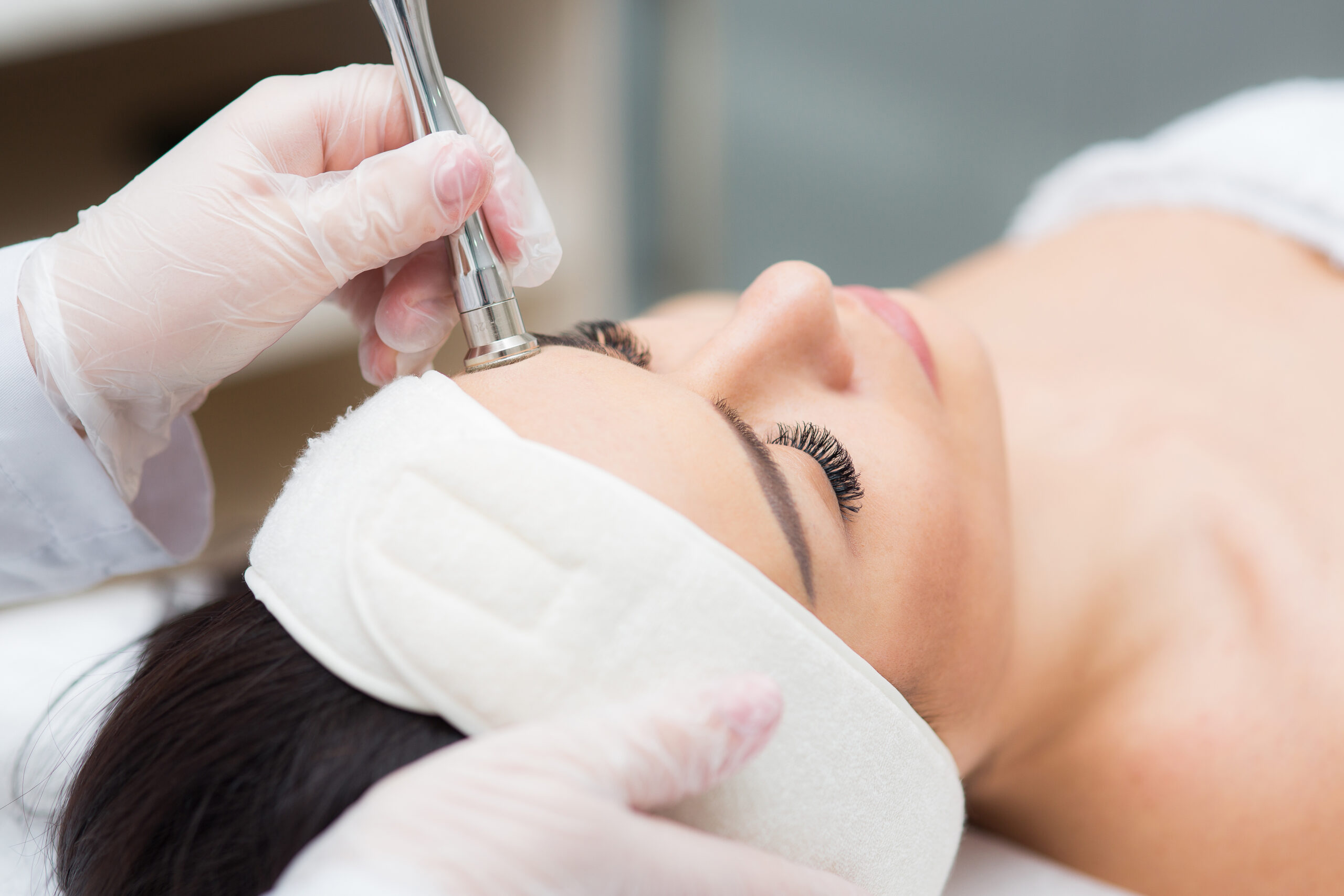
Microdermabrasion is a non-invasive procedure that gently exfoliates the skin’s outermost layer. A specialized device sprays fine crystals or uses a diamond-tipped wand to remove dead skin cells, promoting a brighter and smoother complexion. This treatment is effective for:
- Reducing fine lines and mild wrinkles
- Diminishing superficial acne scars
- Minimizing enlarged pores
- Improving overall skin texture and tone
Microdermabrasion is suitable for most skin types and requires minimal downtime, making it a convenient option for those seeking quick rejuvenation. People with sensitive or rosacea-prone skin, however, may experience irritation and should consult with a skincare professional before proceeding.
Chemical Peels: Deeper Skin Renewal
Chemical peels involve applying a solution containing acids—such as glycolic, salicylic, or trichloroacetic acid—to exfoliate deeper layers of the skin. Depending on the peel’s strength, this treatment can address more pronounced skin issues, including:
Chemical peels are categorized into three levels. Light peels target the outer skin layer for subtle improvements with minimal downtime. Medium peels penetrate deeper to address moderate skin concerns, with a recovery period of about a week. Deep peels reach the lower dermal layers for significant rejuvenation, requiring a more extended recovery time.
It’s essential to have chemical peels performed by qualified professionals to minimize risks and ensure appropriate aftercare.
Choosing the Right Treatment for Your Skin
When deciding between microdermabrasion and a chemical peel, consider the following factors:
Skin Concerns: For surface-level issues like mild acne scars and fine lines, microdermabrasion may suffice. Deeper wrinkles, significant hyperpigmentation, or extensive sun damage might require the more intensive approach of a chemical peel.
Skin Type: Microdermabrasion is generally safe for most skin types but may irritate sensitive skin. Chemical peels can be tailored to different skin types and concerns but require professional assessment to determine suitability.
Downtime: Microdermabrasion offers minimal downtime, while chemical peels, especially medium and deep ones, may necessitate a longer recovery period with specific aftercare routines.
Desired Results: If you’re seeking immediate, subtle enhancements, microdermabrasion is a viable option. For more dramatic and longer-lasting results, particularly for deeper skin issues, chemical peels are preferable.